
Lampwork
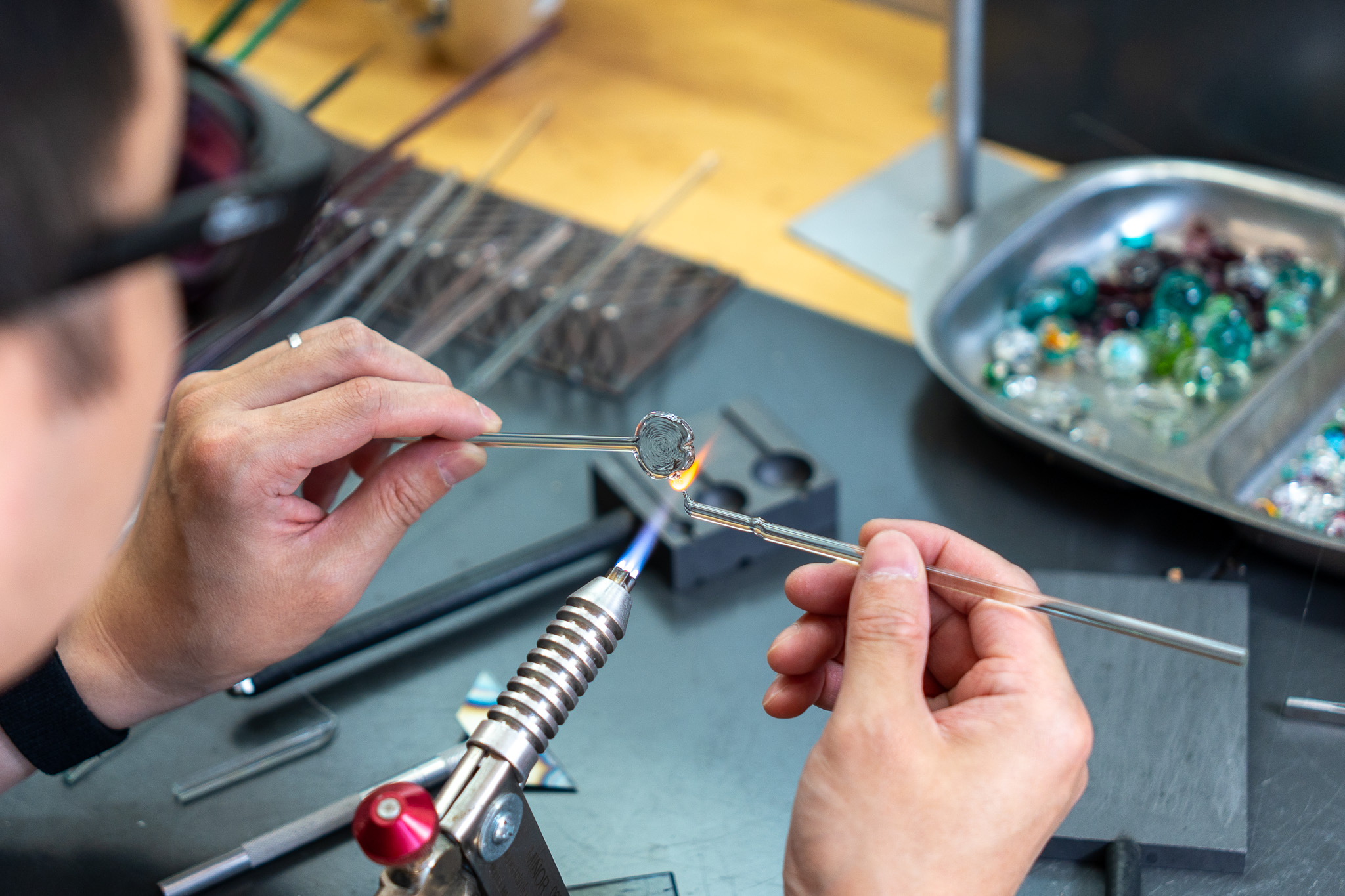
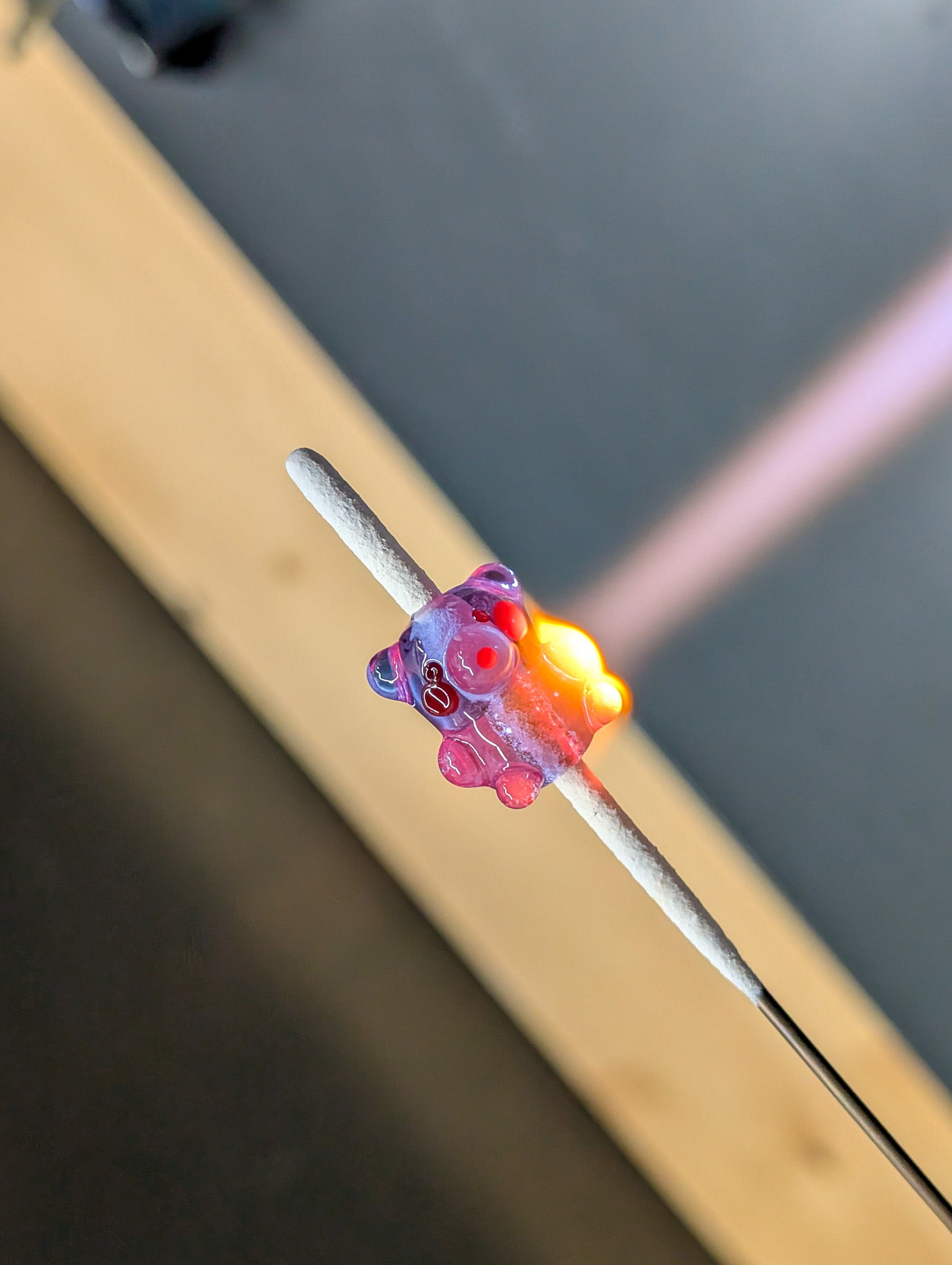
Charms, beads, marbles, stir rods, and little figures usually start at the torch. We heat a rod of glass until the end softens, then add color, clear glass, or whatever small detail the piece needs.
The shape is never completely locked in until it cools, so there is always a little give and a little surprise. That is why two similar pieces still come out with small differences.
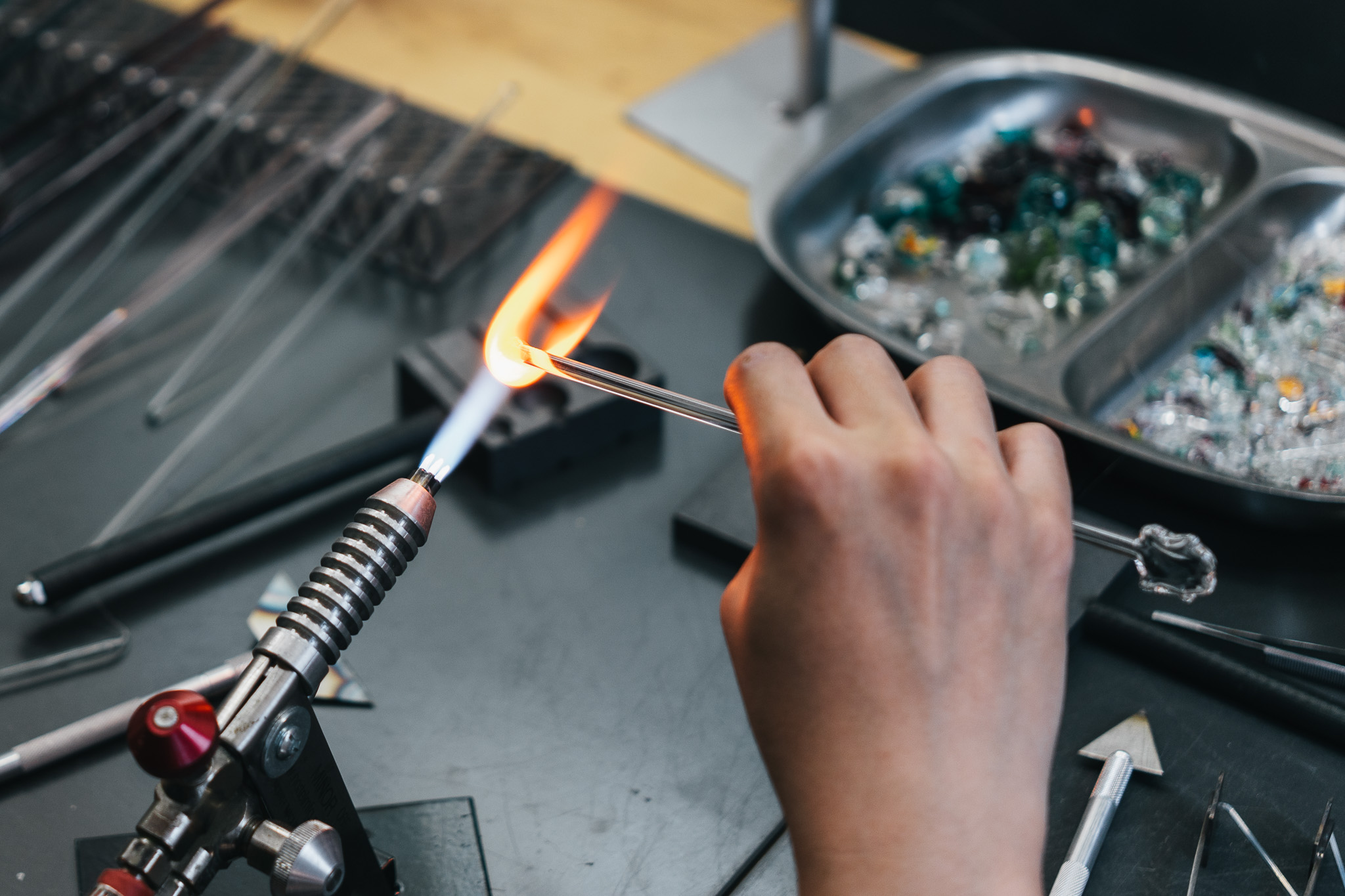
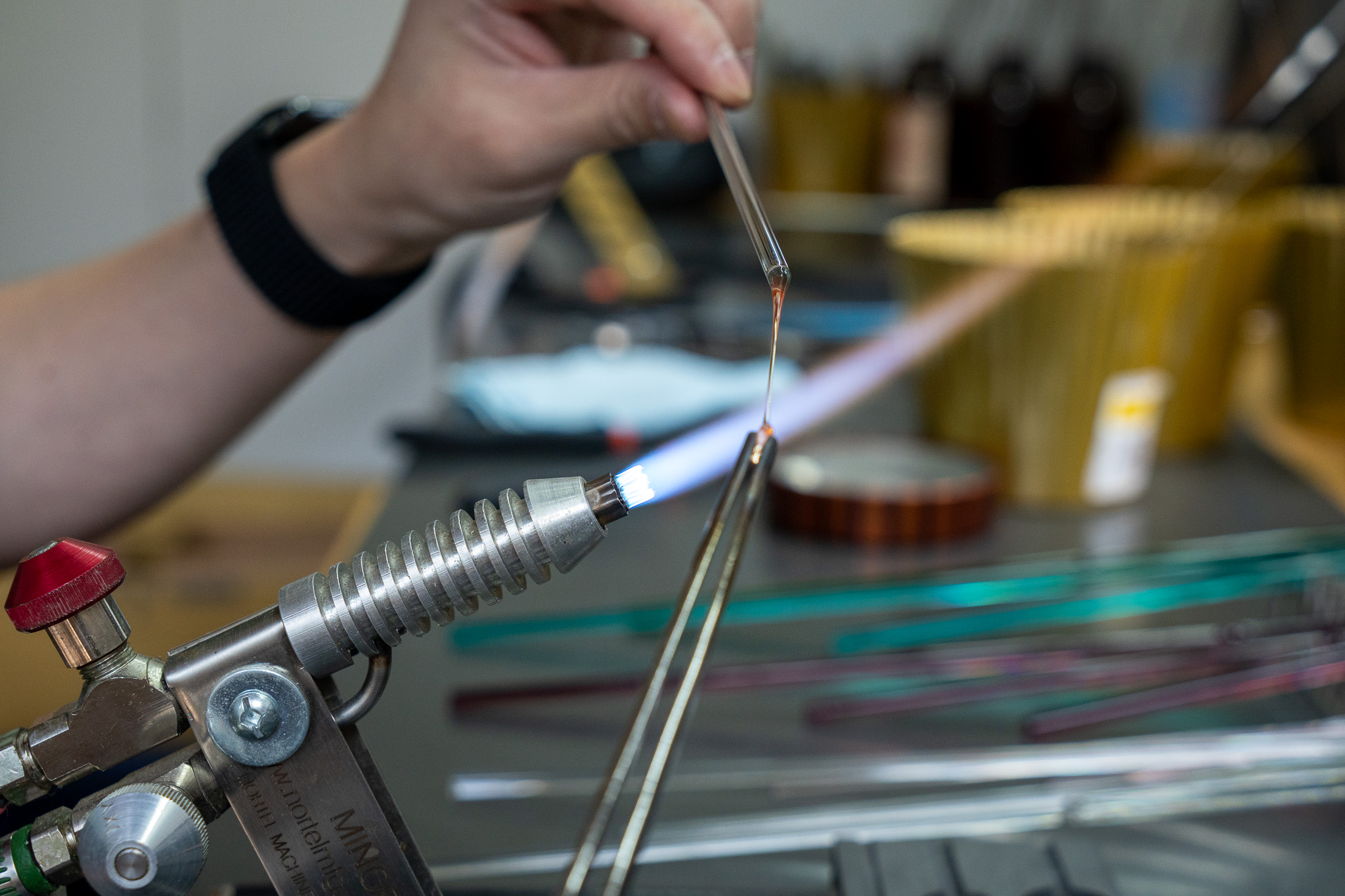
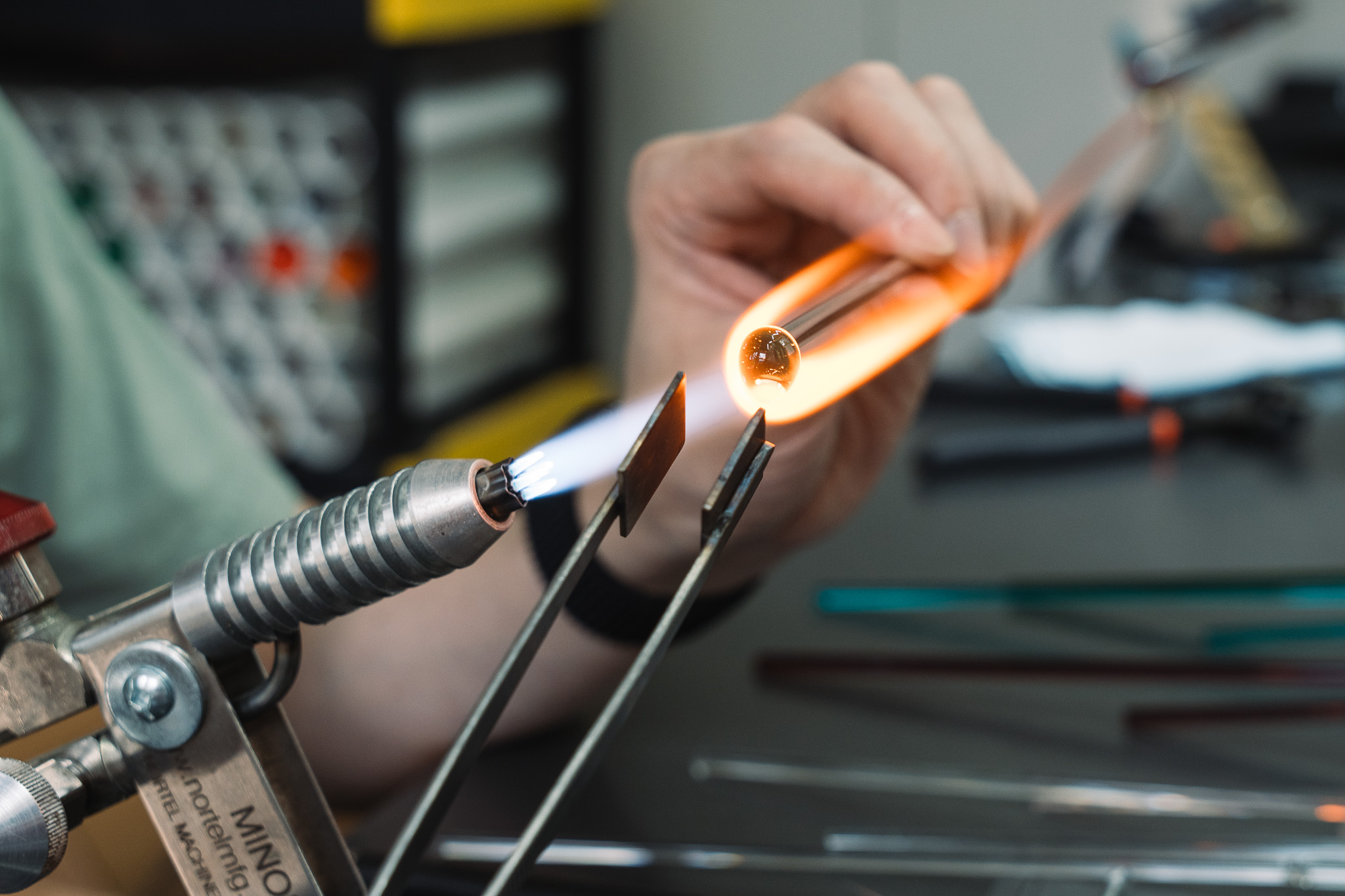
Tiny ears, arms, dots, loops, and handles are fussy in the best way. They need enough heat to attach, but not so much heat that the whole piece slumps or loses the shape we just made.
Kiln-formed glass
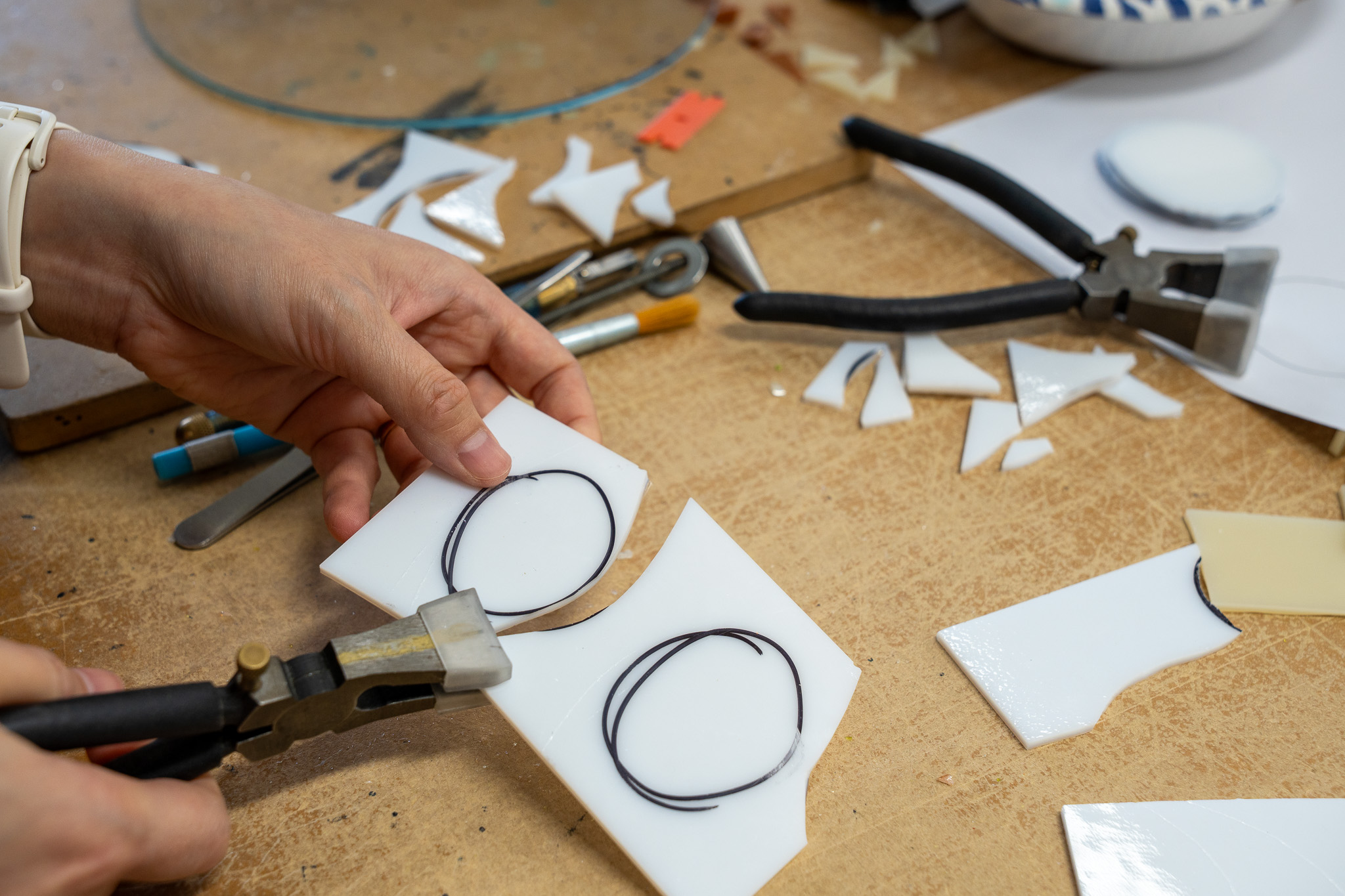
The fused dishes start much more quietly. We cut sheet glass, arrange the pieces cold, and move tiny bits around until the layout feels right enough to fire.
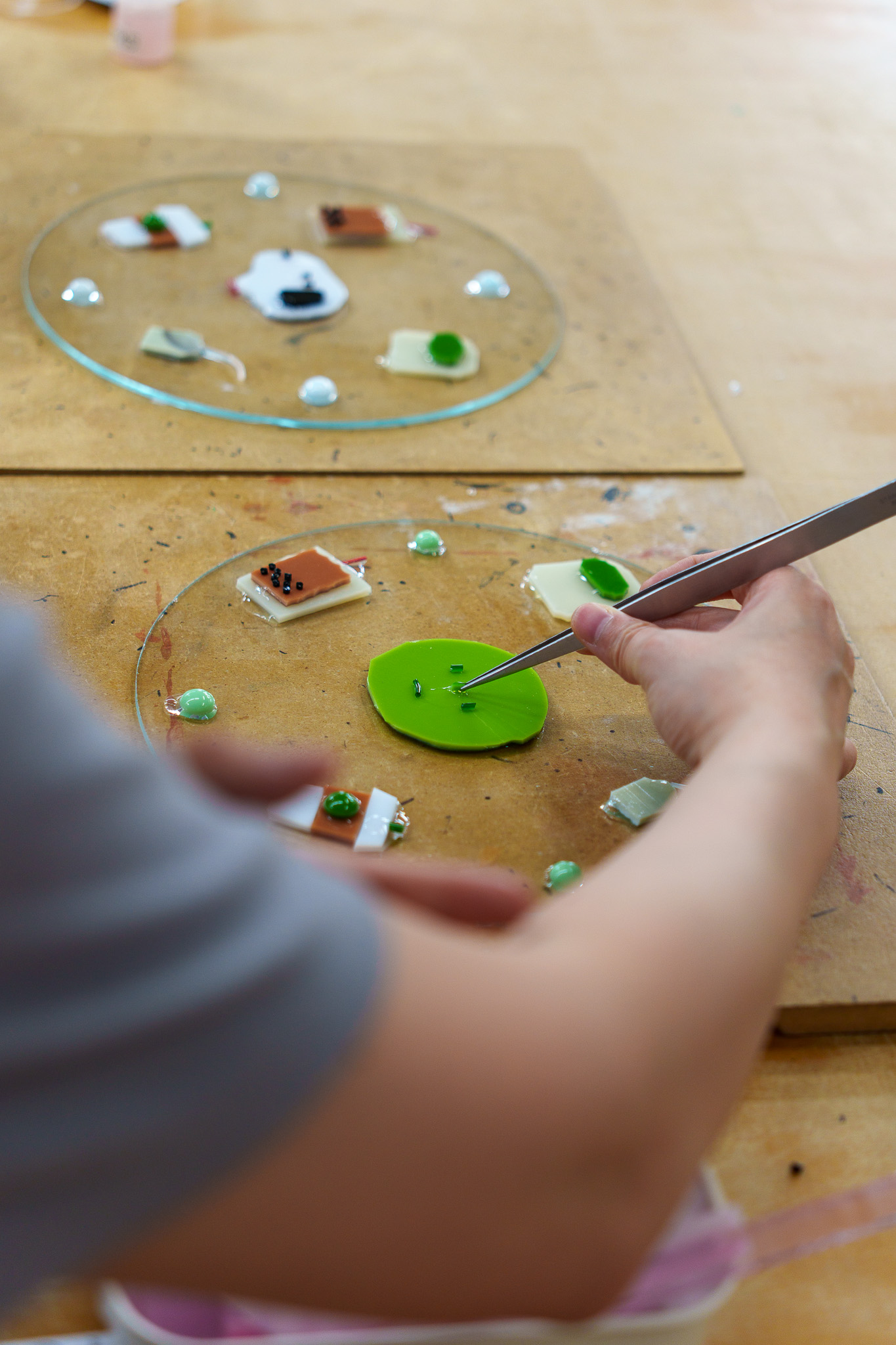
The kiln does the slow part. It softens the edges, joins the layers, and sometimes gives the piece its shallow dish shape in a second firing.
Cooling and care
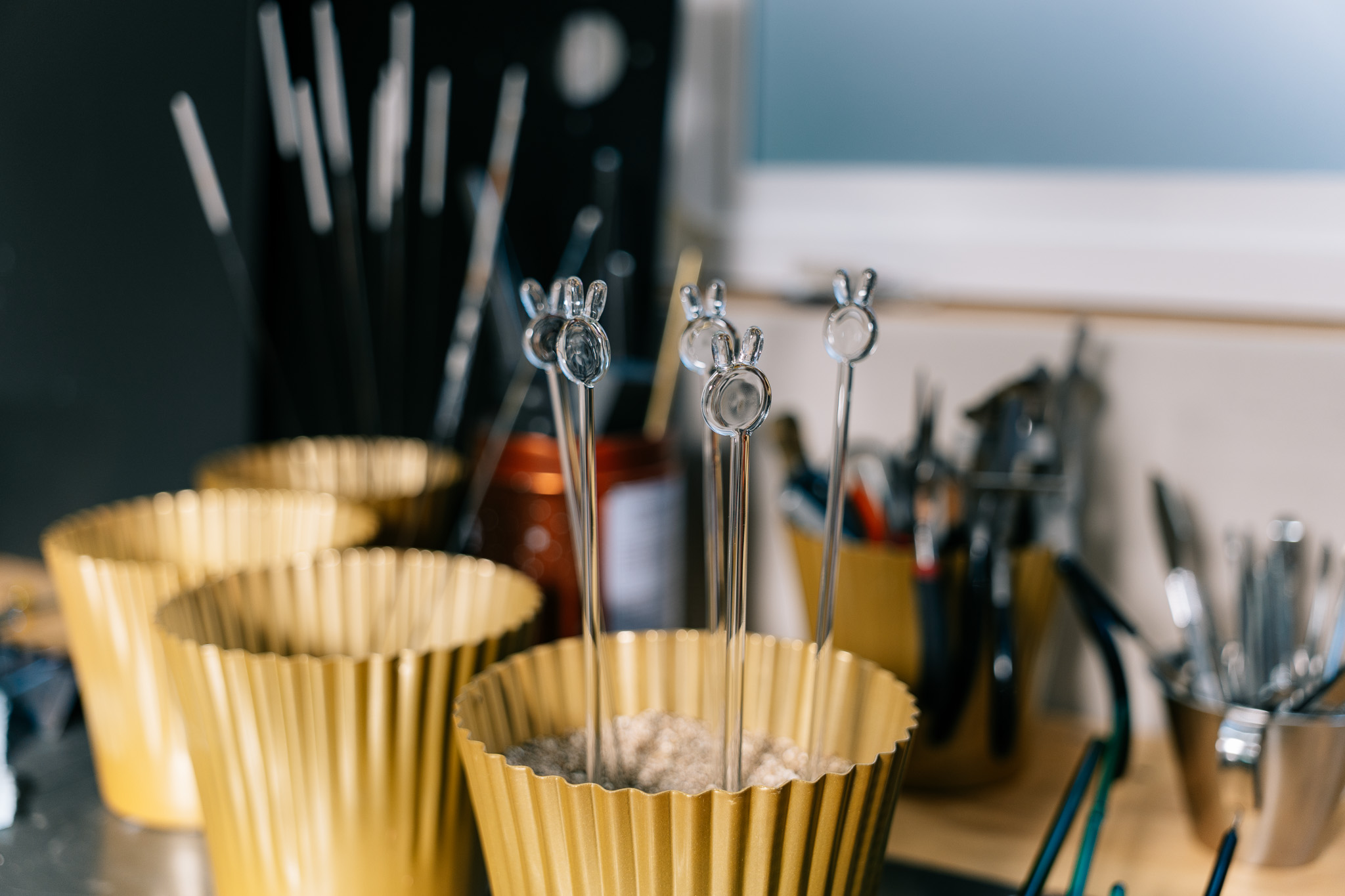
After the torch or kiln, the glass needs time to cool properly. Then we clean it, check the edges, and decide what is ready for the table. Glass is sturdy, but it is still glass: avoid hard drops, sudden temperature changes, and abrasive cleaning. Dishes are best wiped or hand washed gently.